At Karumo Folk Development College in Katavi Region, a childcare worker arranges wooden letter blocks on a low table while twelve toddlers settle into their morning routine. Two of those children belong to young women currently sitting in a tailoring workshop across campus, learning to cut fabric patterns for the first time. By 8:30 a.m., the daycare is full, the classrooms are full, and a system that took years to build is running quietly.
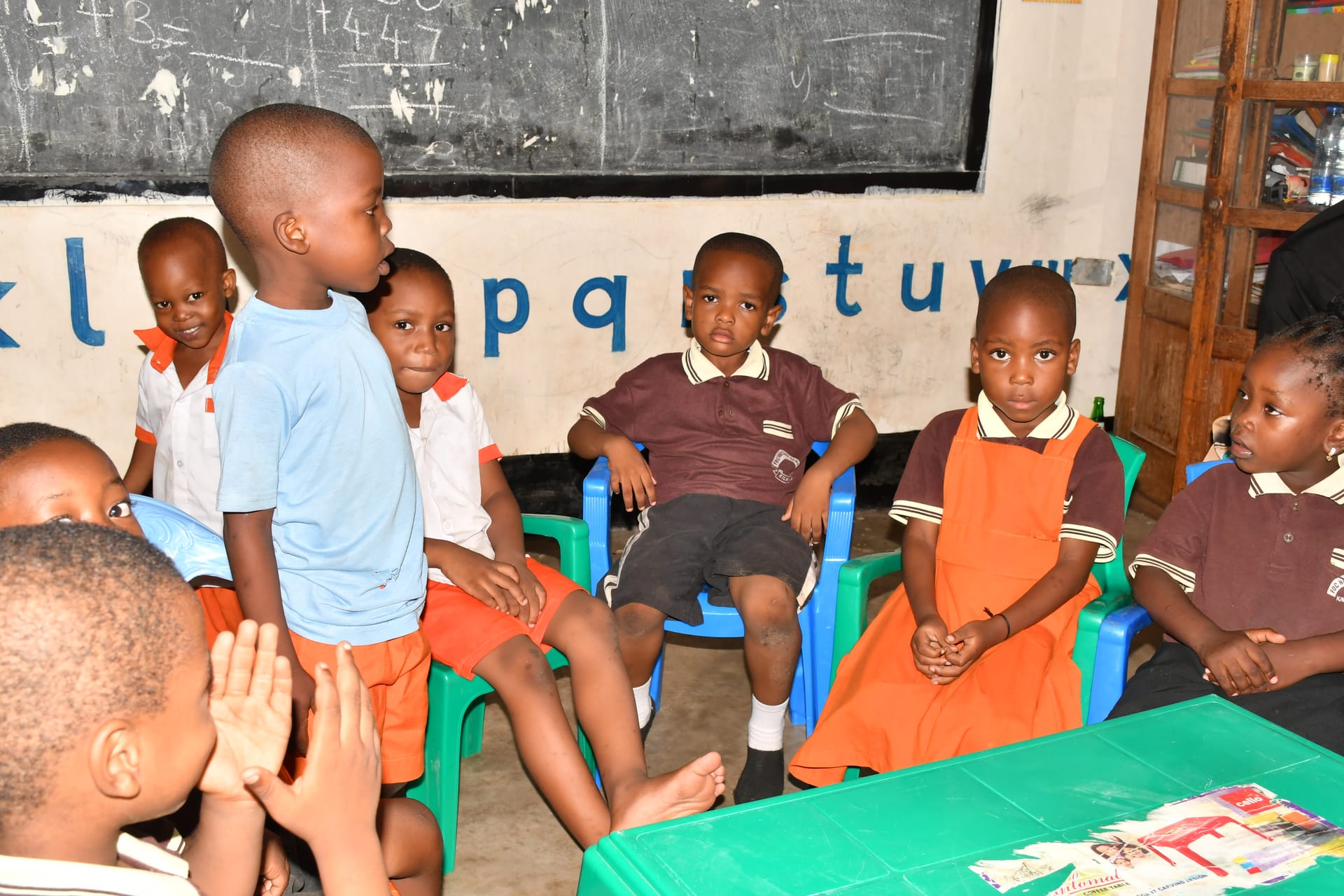
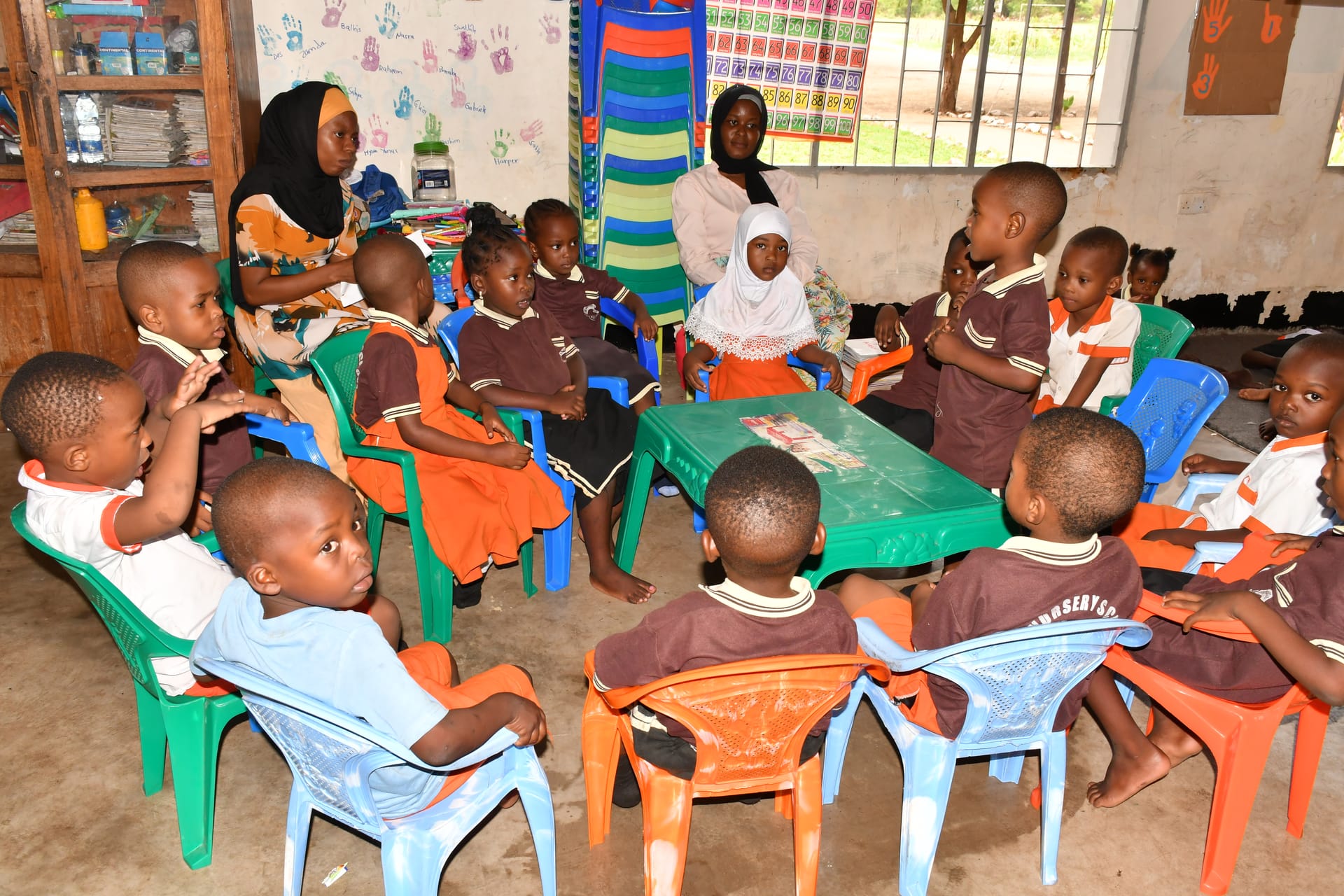
This is what functional education infrastructure looks like when you account for the reality that many students are also mothers. Across Tanzania, KTO operates 37 daycare centers at Folk Development Colleges, caring for 1,013 children (482 boys and 531 girls) while their mothers study. Without these centers, the Elimu Haina Mwisho program, which has enrolled 11,181 young women since 2019, would lose a significant share of its participants before the first term ended.
The problem nobody was solving
When EHM launched as a pilot in three FDCs in 2018, coordinators noticed a pattern almost immediately. Young mothers would enroll, attend for a few weeks, then stop coming. The reason was consistent: no one to look after their children during class hours. Extended family networks, often the default childcare solution in rural Tanzania, did not always extend to campus.
The dropout problem was not about motivation or academic ability. It was logistical. A mother with a two-year-old and no childcare option faces a binary choice: attend class or care for her child. The daycare centers were designed to eliminate that choice entirely.
How the centers work
Each daycare center operates on the FDC campus, usually in a repurposed classroom or purpose-built space. The centers follow structured early childhood development programming, certified by the Commissioner of Social Work and moving toward NACTVET accreditation.
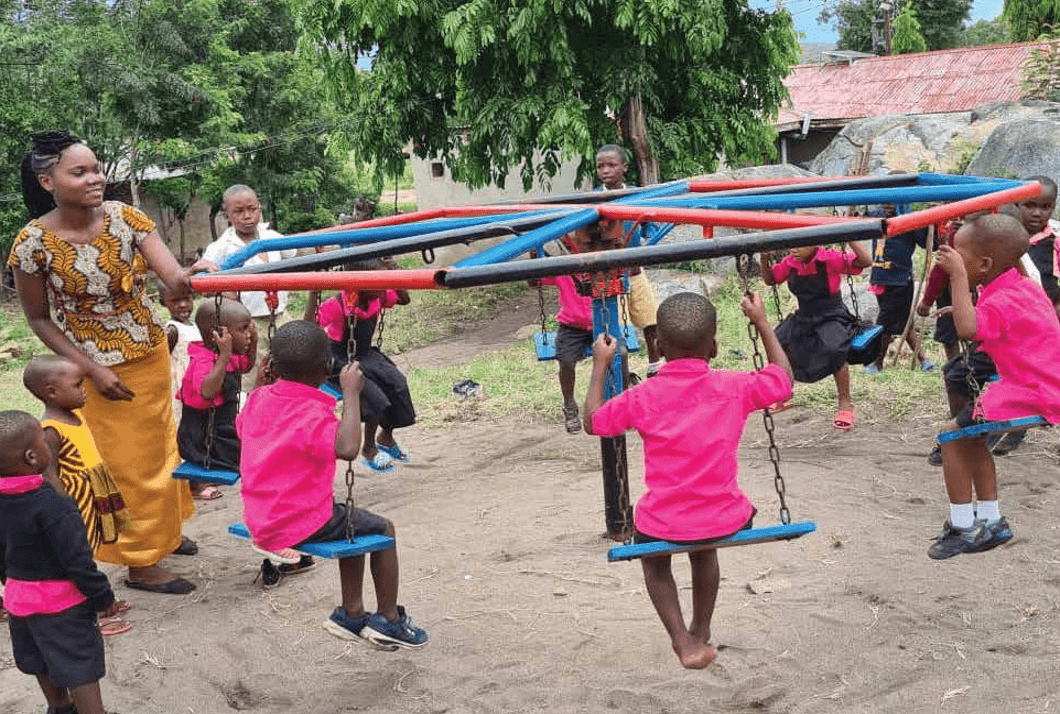
The staffing model connects directly to another KTO program: Early Childhood Development training. At 15 FDCs (with plans to scale to all 55), students can enroll in a three-year NVA Levels 1-3 course in early childhood education. About 60% of graduates find employment, and many of them staff the very daycare centers that serve EHM students.
"The daycare centers are not a separate initiative. They are the connective tissue of the whole system. You train childcare workers through ECD, they run the centers, the centers enable young mothers to attend EHM classes. Remove one piece and the others weaken."
This circular design is deliberate. KTO built its three programs (ECD, EHM, and Mpira Fursa) as an interconnected ecosystem, not as standalone projects competing for funding.
Inside the daily routine
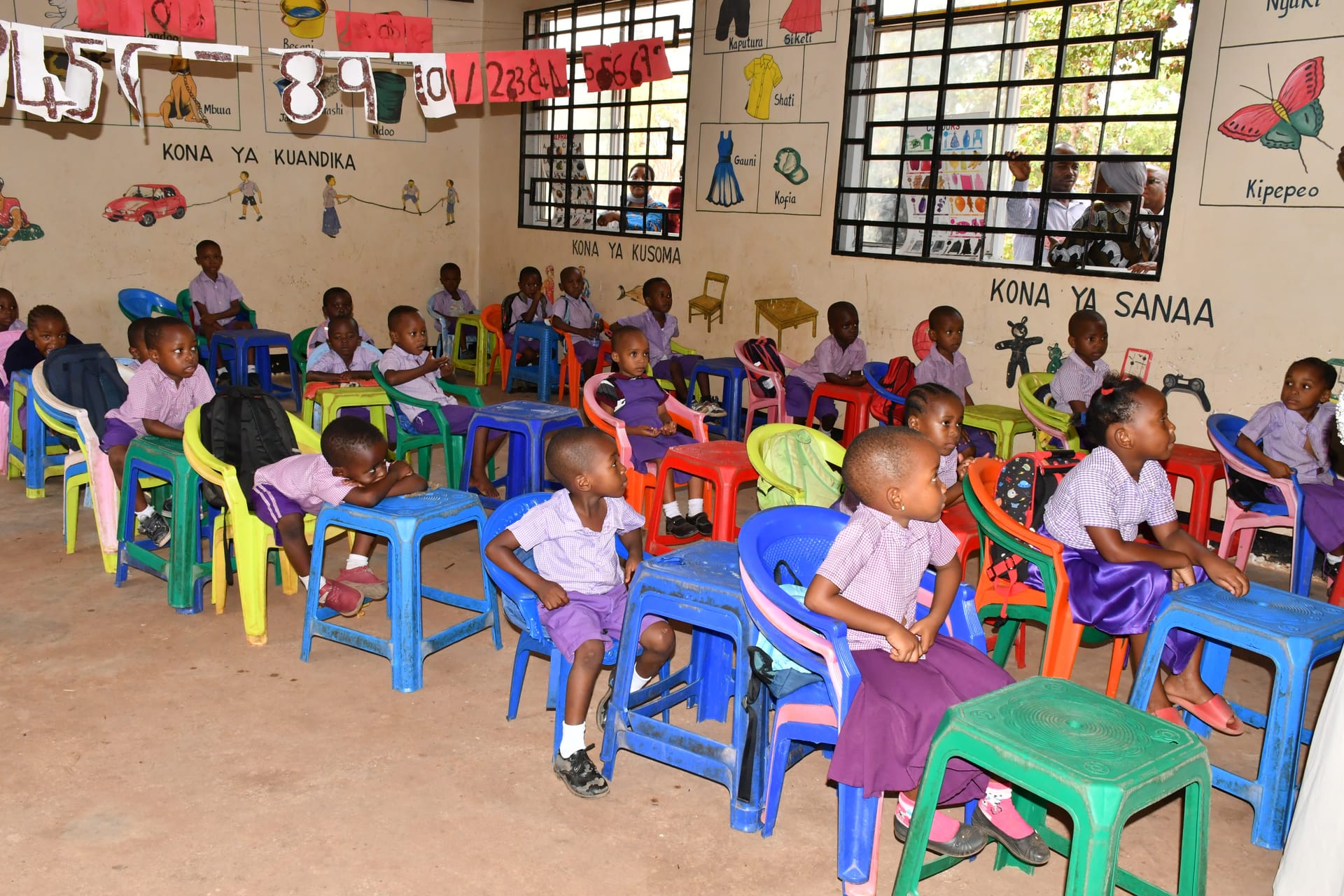
At Singida FDC, the daycare center opens at 7:30 a.m. and runs until 3:30 p.m., matching the class schedule. Children are grouped by age, with activities designed around cognitive development, motor skills, and social interaction. Meals are provided on campus. When a mother finishes her morning session in food processing or digital literacy, she can check in during the lunch break before returning to afternoon practicals.
The children are not simply being watched. They are in a structured learning environment. The daycare workers, many of them ECD graduates themselves, follow curricula that cover early numeracy, language development, and creative play.
The numbers tell a structural story
Across the 37 operational centers:
- 1,013 children currently enrolled (482 boys, 531 girls)
- 15 FDCs with both ECD training programs and daycare centers
- 37 centers operational, with a pathway to expand as ECD scales to all 55 FDCs
- 60% of ECD graduates employed, many in childcare roles within the FDC network
At Malya FDC in Shinyanga Region, the daycare center serves children of both EHM students and community members. This dual function matters: it integrates the FDC into local life and normalizes the idea that education institutions should accommodate parents, not exclude them.

What this means for retention
The correlation is straightforward. FDCs with operational daycare centers report stronger attendance and lower dropout rates among young mothers in EHM. The 2025 cohort of 1,725 EHM students includes a substantial number of mothers who would not be enrolled without campus childcare.
The government recognized this connection when it formally acknowledged EHM in December 2024. The fee waiver of 250,000 TZS per participant and meal subsidy of 810,000 TZS per student per year apply across the system. Government-paid teacher salaries cover EHM instructors. But the daycare infrastructure, funded through KTO's partnerships with Sida and DVV International, is what makes the seats fillable.

Childcare as education policy
The lesson from KTO's model is not complicated, but it is frequently overlooked in education policy: childcare is not a welfare add-on. It is core infrastructure. When the Tanzanian government expanded EHM to 54 FDCs and committed public resources to teacher salaries and student subsidies, the implicit assumption was that students could physically attend. The daycare centers are what makes that assumption true.
As KTO scales ECD training from 15 to all 55 FDCs, each new training cohort produces workers who can staff new centers. Each new center unlocks capacity for more EHM students. The ecosystem feeds itself.
"Every daycare center we open is also a classroom we fill. The two things are the same investment."
Across 37 centers, 1,013 children are learning their letters while their mothers learn trades. That is not a side benefit. That is the design.