A young mother walks her two-year-old son across the campus of Karumo Folk Development College in Katavi Region, drops him off at the daycare center by 7:45 a.m., and continues to her tailoring workshop. Three buildings away, her older daughter, still in primary school, laces up cleats for morning football practice with her Mpira Fursa team. By 8:00 a.m., all three are inside the same FDC system, connected by programs that were designed to work together.
This is not a coincidence. It is architecture. KTO operates three programs, Early Childhood Development (ECD), Elimu Haina Mwisho (EHM), and Mpira Fursa, that most organizations would run as separate initiatives with separate budgets, separate staff, and separate theories of change. KTO runs them as one system through the same network of 55 Folk Development Colleges. Each program solves a problem that the others cannot solve alone.
Connection one: daycare makes education possible
The most immediate link runs between ECD and EHM. Since 2019, 11,181 young women have enrolled in EHM, a second-chance education program for those who left school due to pregnancy, early marriage, or economic hardship. Many of them are mothers. Without childcare, they cannot attend class. Without class, the entire program fails.
KTO operates 37 daycare centers across FDC campuses, caring for 1,013 children (482 boys and 531 girls). These centers are staffed by graduates of the ECD training program, which runs at 15 FDCs and is scaling to all 55. The training follows a three-year NVA Levels 1-3 curriculum, and about 60% of graduates find employment. Many of them work in the very daycare centers that serve EHM students.
The loop is tight: train childcare workers through ECD, place them in FDC daycare centers, and use those centers to enable young mothers to attend EHM classes. Remove the daycare and EHM enrollment drops. Remove the training pipeline and the daycare centers cannot staff up. The programs are structurally dependent on each other.
"You cannot run a second-chance education program for young mothers without solving the childcare problem first. The daycare centers are not an add-on. They are the foundation."
Connection two: football prevents the dropout that creates the need
Mpira Fursa operates at a different point in the cycle. The program works with primary school children, particularly girls, using football as the mechanism to keep them in school. Across 113 primary schools in 24 regions, 226 football teams (172 of them girls' teams) engage more than 10,000 children annually.
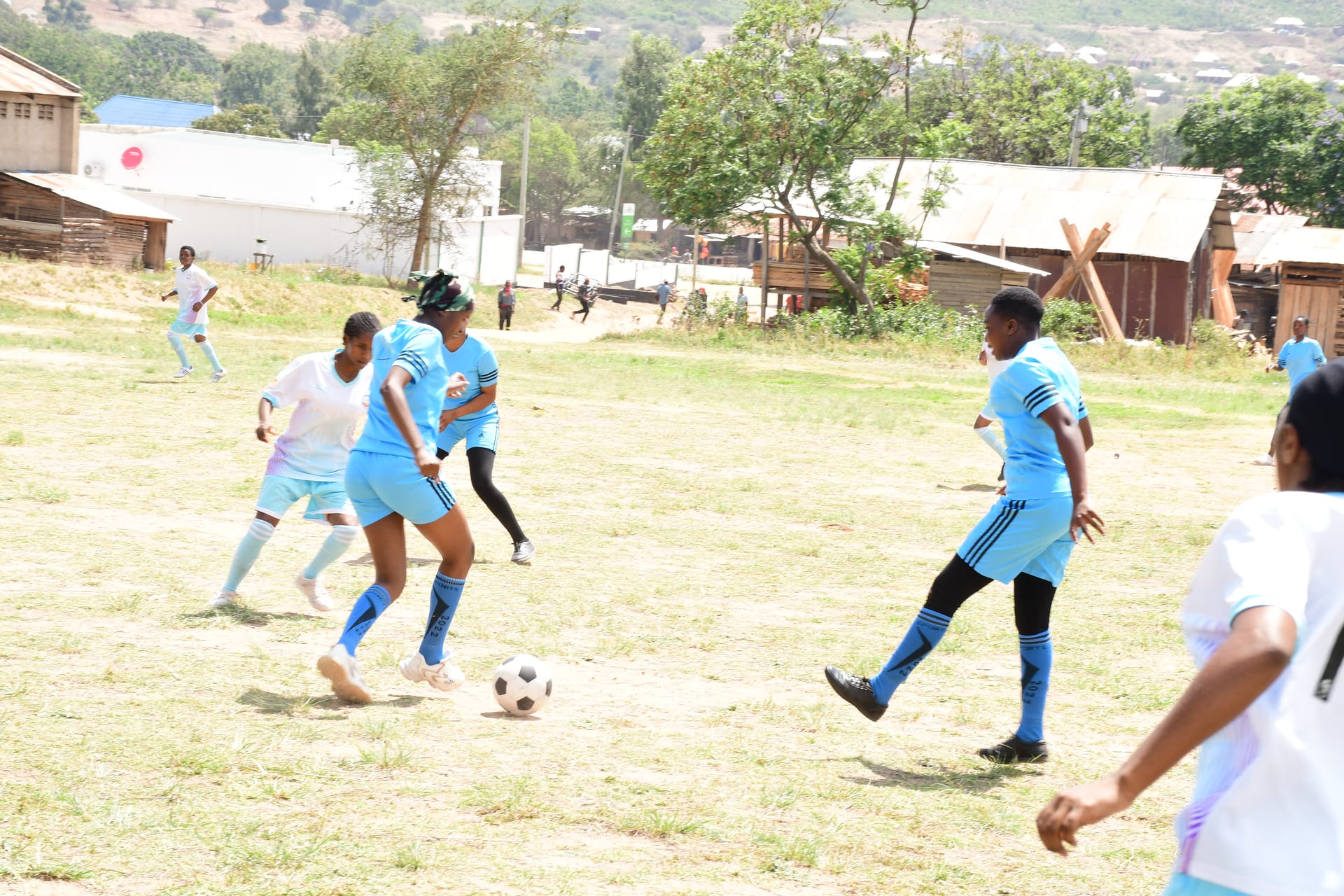
The logic is preventive. Many of the young women who end up in EHM left school during or just after primary school. Mpira Fursa targets that exact transition point. The program provides structured activity, peer community, and adult mentorship during the years when dropout risk is highest. Girls who stay in school are less likely to experience early pregnancy or early marriage, which means fewer young women needing a second-chance program later.
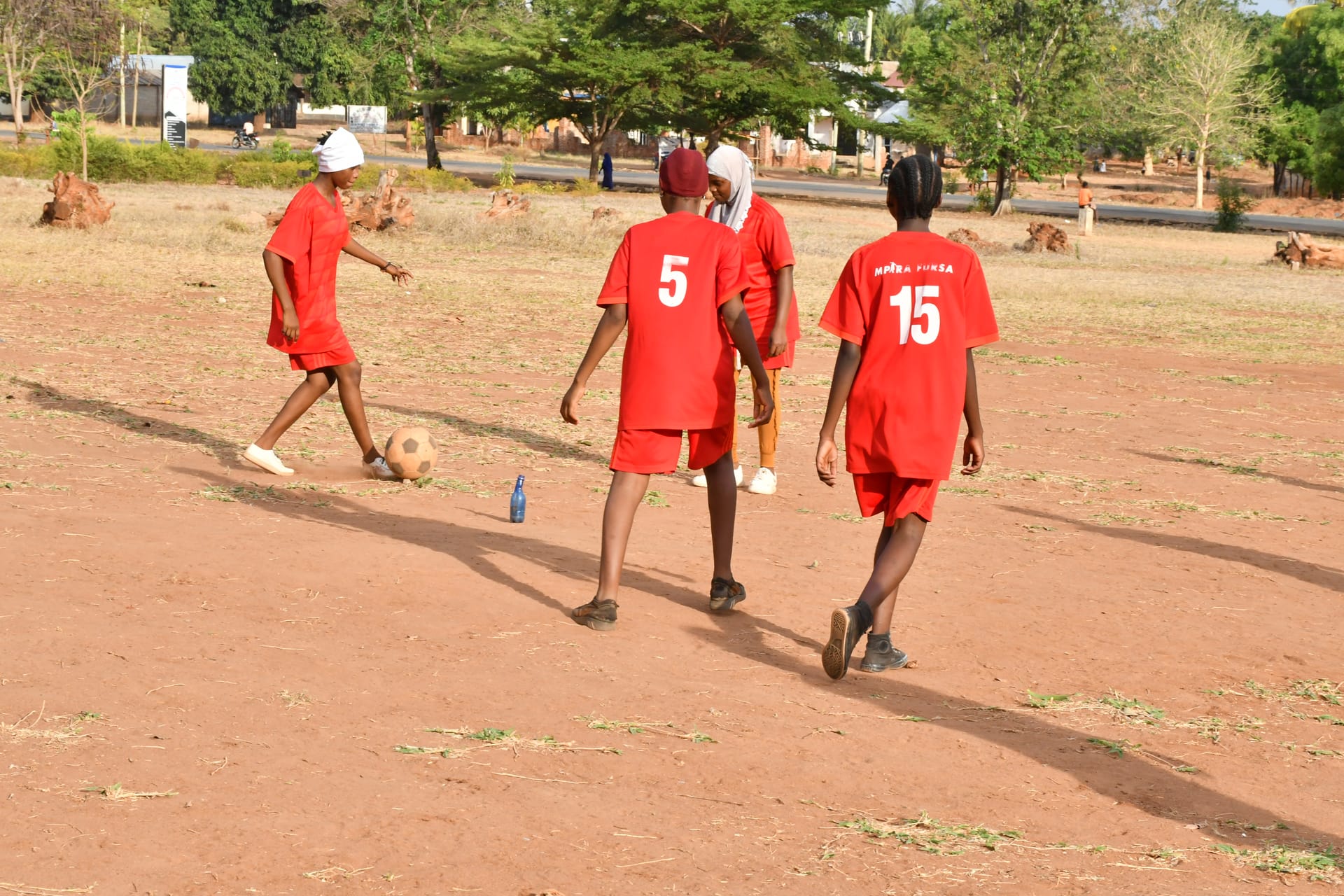
This does not mean Mpira Fursa eliminates the need for EHM. Dropout is driven by poverty, cultural pressure, and systemic gaps that no single program can erase. But the scale of prevention matters. With more than 10,000 children in the football system each year, even a modest improvement in school retention compounds over time.
"Mpira Fursa and EHM are two responses to the same problem at different stages. One works to keep girls in school. The other catches those who fall through."
Connection three: football production meets vocational training
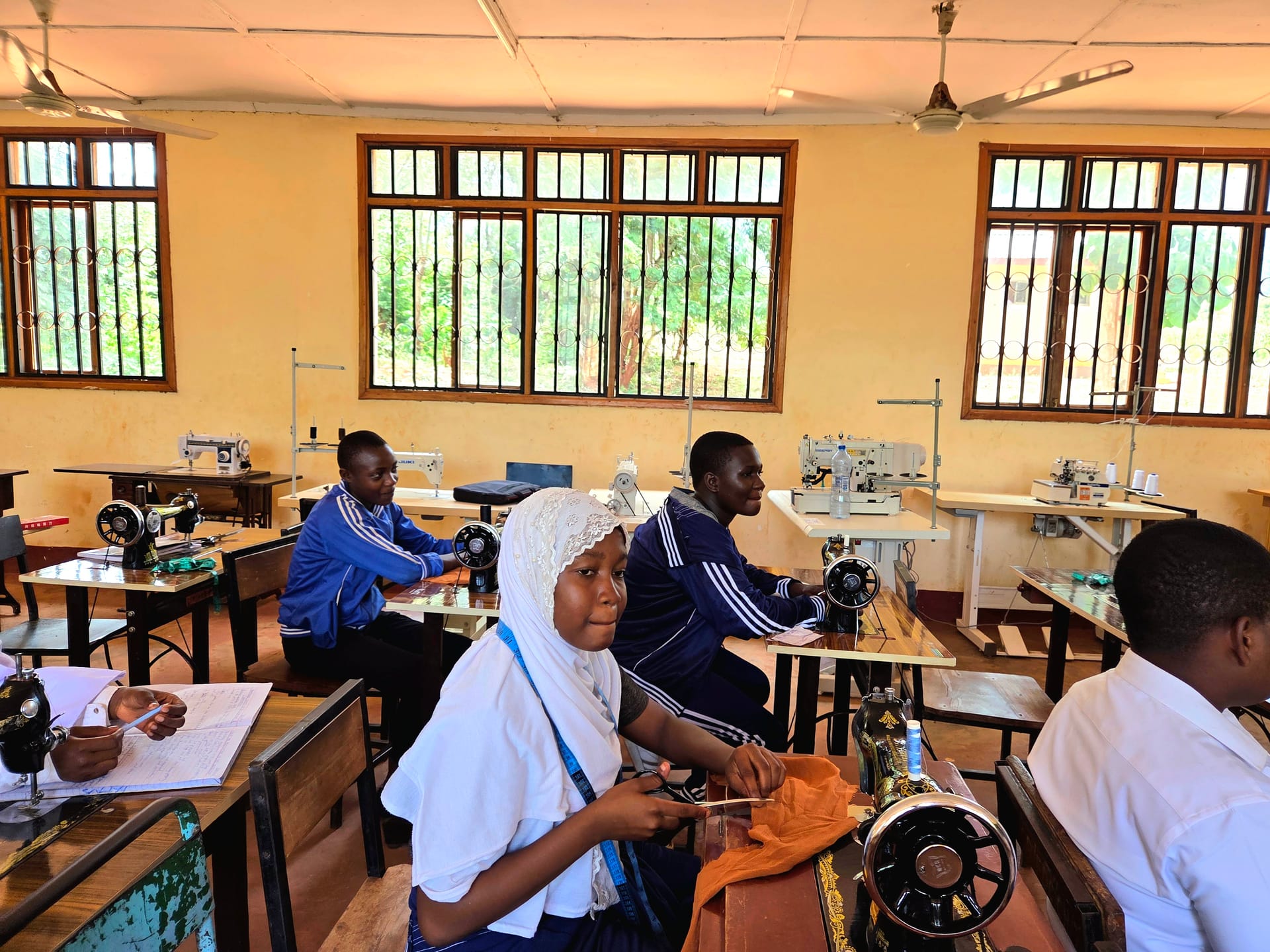
The third connection is the most unexpected. Mpira Fursa distributes 339 footballs across its 226 teams. Rather than importing them, KTO partnered with the Dar es Salaam Institute of Technology (DIT) in Mwanza to develop a football production module. Sixteen EHM tailoring instructors have been trained in football manufacturing, and the program is being integrated into FDC vocational workshops.
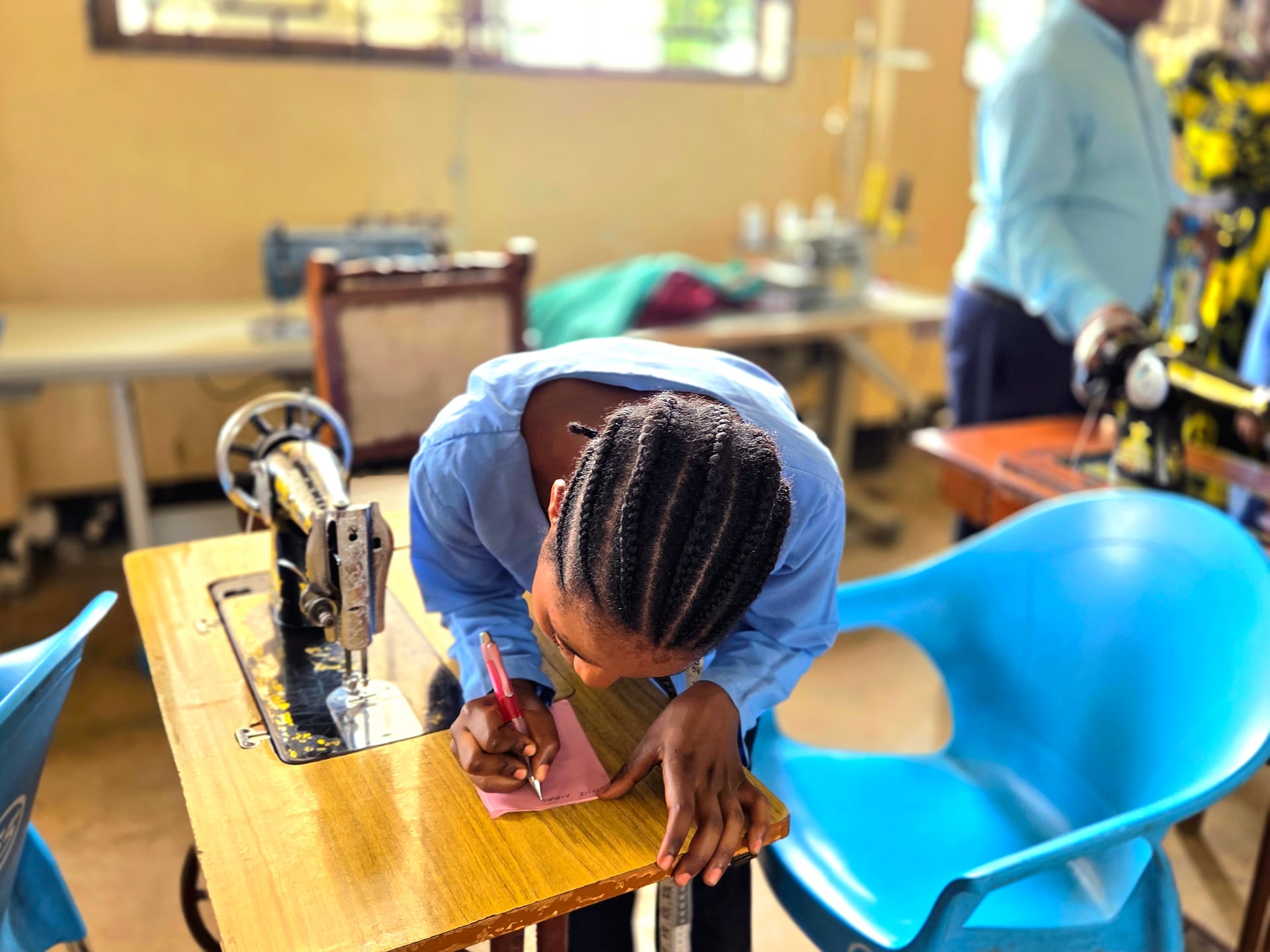
This means EHM students in tailoring programs can learn football production as part of their vocational curriculum. The footballs they produce supply Mpira Fursa teams. The vocational skill they gain, industrial sewing, pattern cutting, material quality control, is transferable to other manufacturing work after graduation.
It is a small example, but it illustrates the principle. When programs share infrastructure, the connections multiply. A tailoring workshop that also produces sports equipment serves two programs at once and gives students a concrete product with a real buyer.
The infrastructure underneath
All three programs run through the same network: 55 Folk Development Colleges spread across every region of Tanzania. This shared infrastructure is what makes the interconnected model possible and affordable.
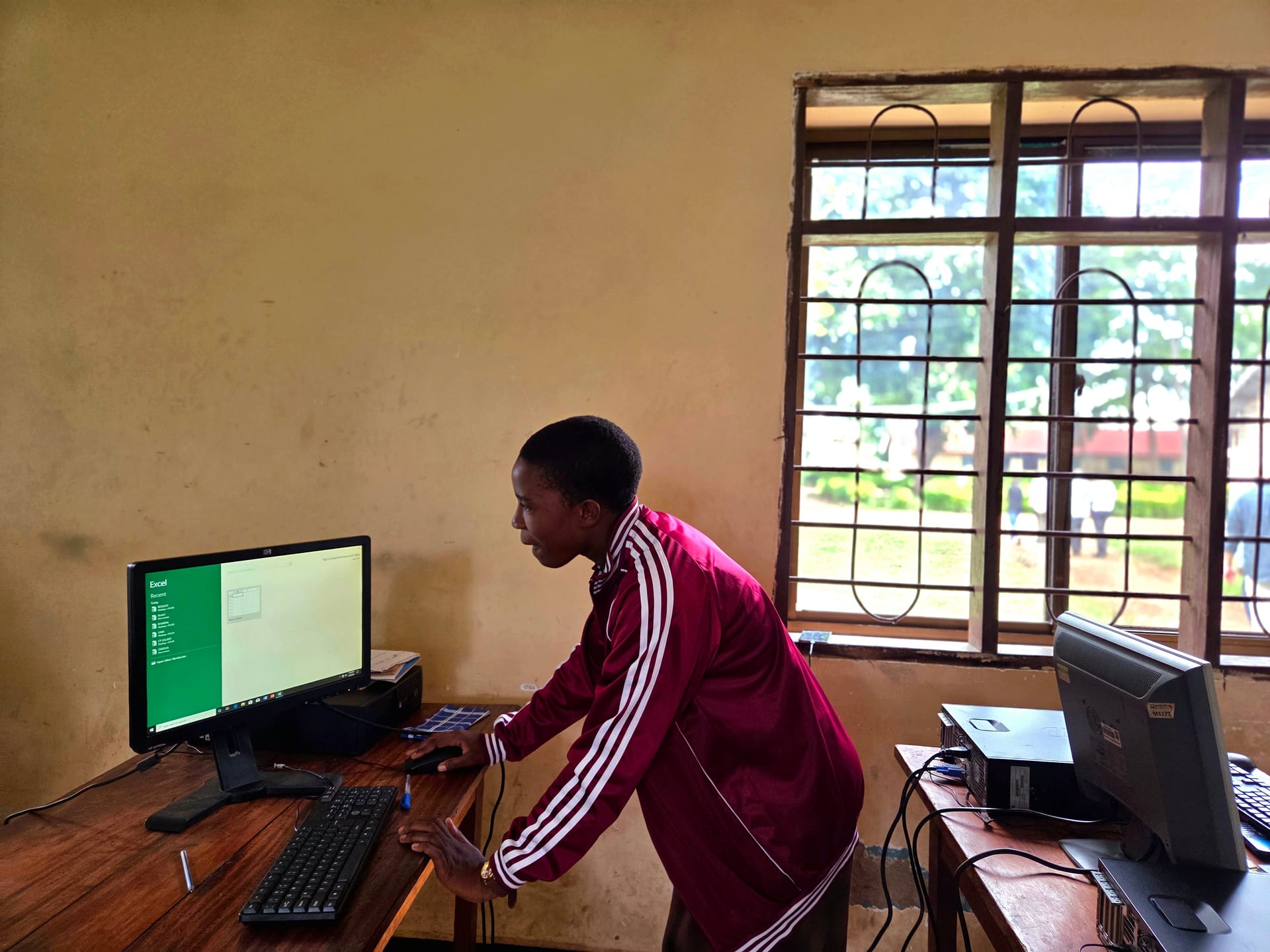
The government provides the FDC campuses, pays teacher salaries, covers meal subsidies of 810,000 TZS per student per year, and waives fees of 250,000 TZS per EHM participant. KTO provides program design, teacher training, monitoring, and the connective tissue between programs. In the 2024/25 academic year, 21,104 learners were enrolled across the FDC system.
Only five countries in the world have the Folk Development College model: Sweden, Finland, Denmark, Norway, and Tanzania. The FDC network gives KTO something that most NGOs lack, a nationwide institutional backbone that already exists, is already funded, and already has community trust.

Why silos fail
Development programs that operate in isolation solve one problem at a time. A standalone football program keeps kids active but does not address what happens when a girl drops out anyway. A standalone education program enrolls young mothers but loses them when they cannot find childcare. A standalone childcare program trains workers but has no institutions to place them in.
KTO's model works because the connections are intentional, not accidental. Each program was designed with the others in mind. The daycare centers exist because EHM needed them. The football production module exists because Mpira Fursa needed equipment and EHM needed vocational projects. The ECD training pipeline exists because the daycare centers needed qualified staff.
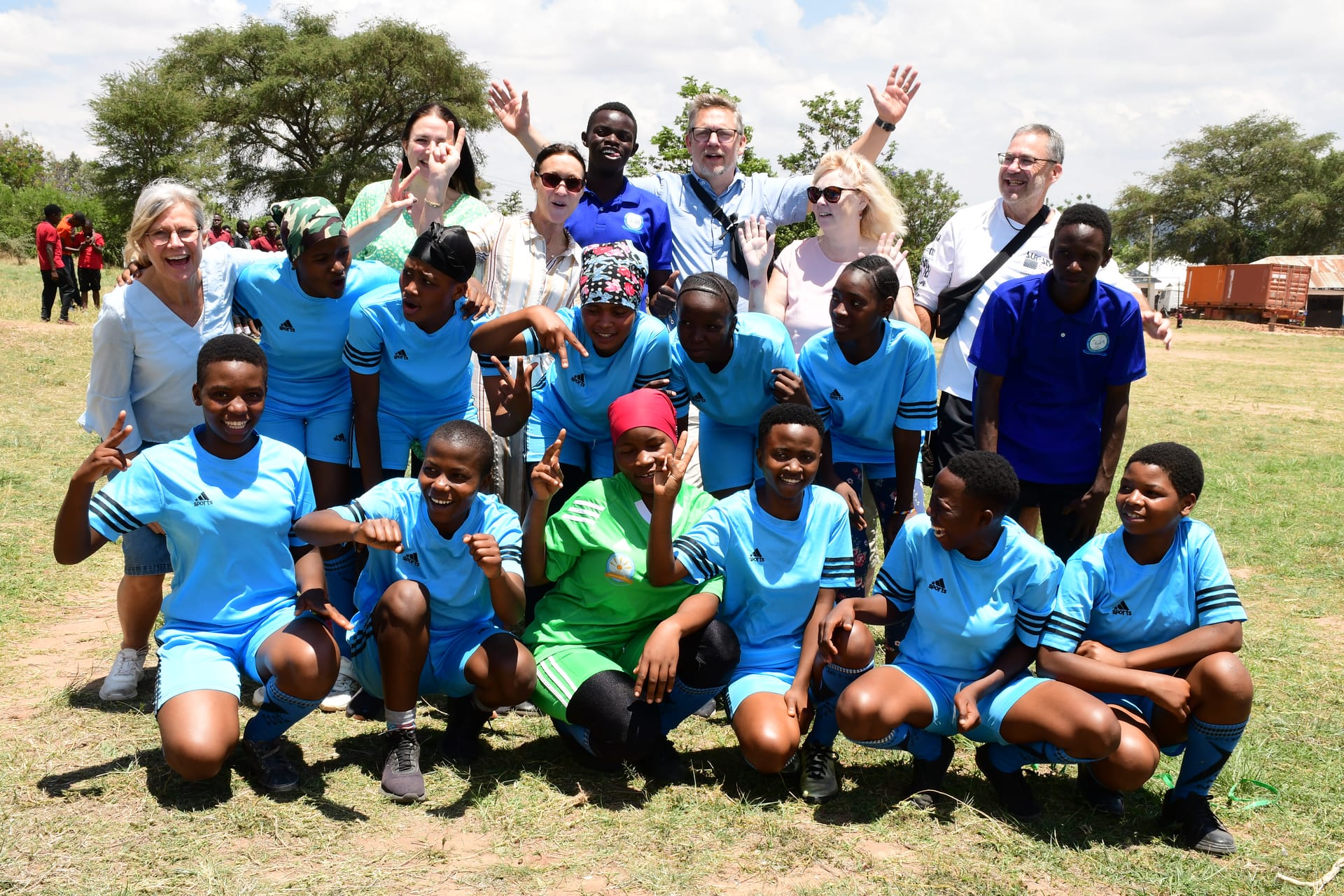
The combined numbers tell the story of scale: 11,181 women through EHM, 10,000+ children in football annually, 1,013 children in daycare, 21,104 total FDC learners. But the numbers alone miss the point. The point is that these are not three programs. They are one system with three entry points, running through 55 colleges, in 24 regions, across a country where the infrastructure was already built.
The young mother at Karumo FDC does not think of herself as a participant in three programs. She drops off her son, walks to class, and knows her daughter is on the pitch. The system works because she does not have to think about it at all.