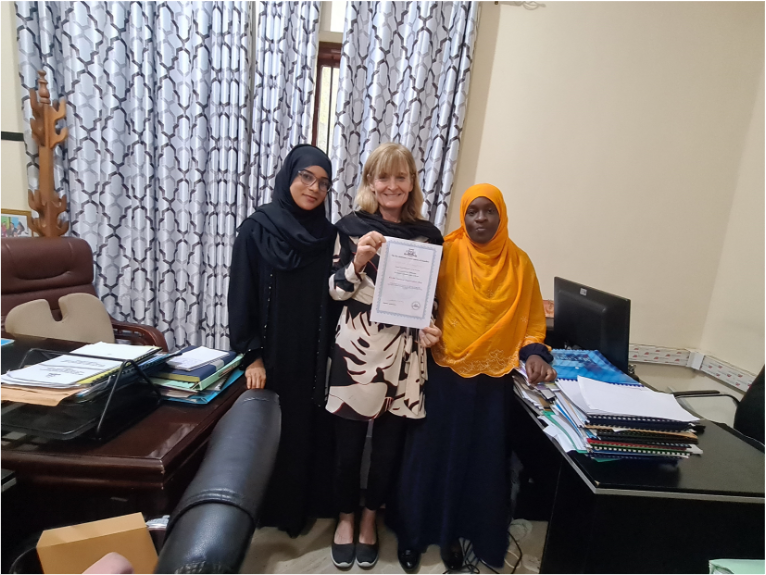
The registration certificate is dated 2024. It is a single document, printed and stamped, but it represents something KTO has never done before: operate outside the Tanzanian mainland. After 34 years building folk education through 55 Folk Development Colleges across 24 regions, Karibu Tanzania Organization is now legally registered in Zanzibar, with a signed memorandum of understanding and an office on the islands.
The MoU, signed with Zanzibar's Ministry of Education and Vocational Training (MoEVT), covers the period through 2027. It brings all three of KTO's programmes to the islands: Elimu Haina Mwisho, Mpira Fursa, and Early Childhood Development. This is not a tentative pilot. It is a structured, multi-year integration into Zanzibar's education system.
A Different Institutional Landscape
The mainland has 55 FDCs. Zanzibar has none. What Zanzibar does have are Adult and Lifelong Education (ALAE) centers, institutions that serve a similar function, providing community-based education to adults and out-of-school youth, but within a different administrative and curricular framework.
This distinction matters. KTO's entire model on the mainland is built around the FDC infrastructure: training happens at FDCs, coaches deploy from FDCs, daycare centers operate within FDC campuses. Transplanting that model directly would fail. The approach in Zanzibar is adaptation, not replication.
"We are not bringing a mainland programme to Zanzibar. We are working with Zanzibar's institutions to build something that fits their context. The principles are the same. The structures are different."
The Study Visit That Built Trust
Before signing anything, Zanzibar's education leadership wanted to see the model working. In 2024, a delegation visited three mainland FDCs: Kilwa Masoko, Kigamboni, and Ikwiriri. The delegation included the Deputy Permanent Secretary, the Director of Secondary Education, the Director of the Vocational Training Authority, and the Head of Raha leo Centre, which is the Wingwi center in Pemba.
They observed EHM classes in session. They visited daycare centers where children of young mothers were cared for while their mothers attended vocational training. They watched Mpira Fursa football sessions at nearby primary schools. They asked detailed questions about curriculum, staffing, and costs.
The visit was practical, not ceremonial. Zanzibar's officials needed to understand the operational mechanics: how many teachers per center, what training they require, how the daycare component enables attendance, how football sessions are scheduled around the school day. By the end of the visit, the scope of the partnership was clear.
Three Programmes, Adapted for the Islands
Elimu Haina Mwisho in Zanzibar will operate at two ALAE centers initially. The curriculum follows the same NVA Levels 1-3 framework used on the mainland, covering vocational skills like tailoring, food processing, entrepreneurship, and digital literacy. On the mainland, EHM has reached 11,181 participants since 2019 across 54 FDCs. In Zanzibar, the scale starts smaller, but the model is proven.
The critical adaptation is institutional. ALAE centers have different staffing structures, different reporting lines, and different community relationships than FDCs. KTO's team is working with MoEVT to map the EHM curriculum onto ALAE operations rather than imposing the FDC version.
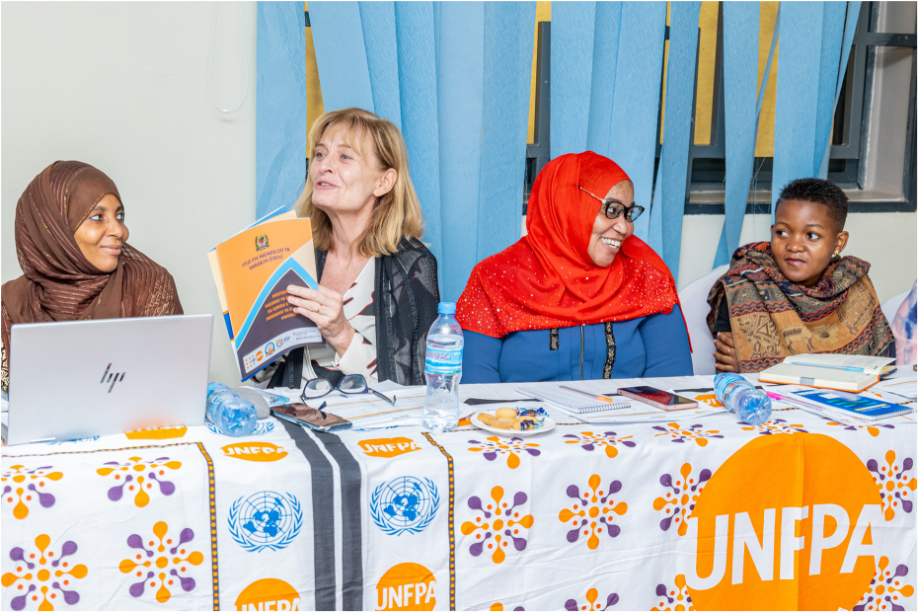
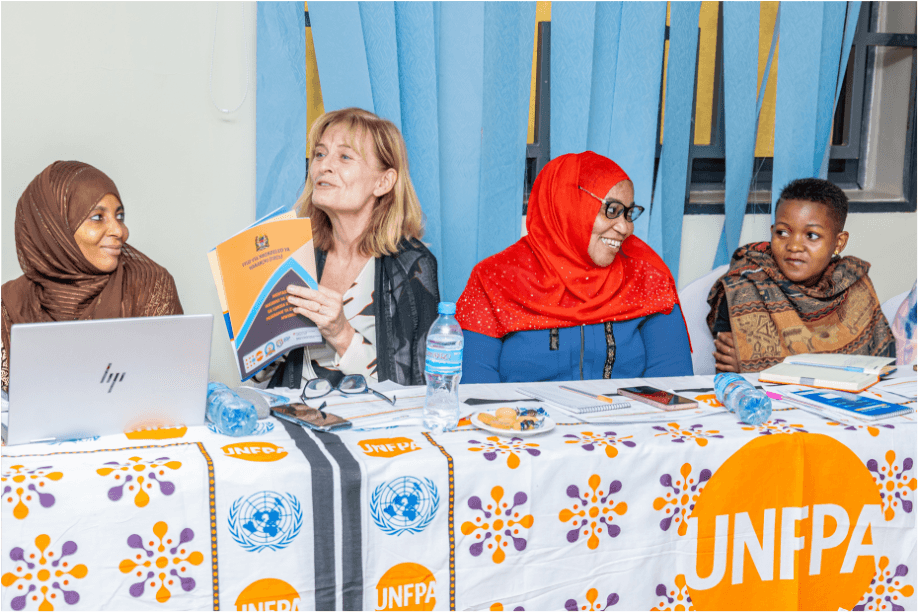
Mpira Fursa in Zanzibar involves a new partnership with the Zanzibar Football Federation (ZFF). On the mainland, the programme works with the Tanzania Football Federation and is funded through the UEFA Foundation for Children and UNFPA. The Zanzibar arm will follow the same integrated model: football training combined with life skills education, SRHR curriculum, and community engagement. The ZFF partnership gives the programme local legitimacy and access to existing football infrastructure on the islands.
Early Childhood Development is the third piece. On the mainland, KTO operates 37 daycare centers at FDCs, caring for 1,013 children. These centers are what make EHM possible: young mothers can attend classes because their children are in safe, structured care on the same campus. Without the ECD component, attendance would collapse. Zanzibar's ALAE centers will need the same enabling infrastructure.
Why This Matters Beyond Zanzibar
KTO's model has always been tied to a specific institution: the Folk Development College. The FDC system is unique to Tanzania (and the Nordic countries that inspired it: Sweden, Finland, Denmark, and Norway). That specificity is a strength, but it raises a question: is the model transferable, or is it only viable within FDC walls?
Zanzibar provides the test case. If EHM, Mpira Fursa, and ECD can operate effectively through ALAE centers, which are structurally different from FDCs, it proves that the approach is portable. The core elements (vocational training for young mothers, sport-based life skills for girls, daycare to enable participation) do not depend on one type of institution. They depend on the design principles: integration, community embedding, and government co-investment.
"Zanzibar is not just an expansion. It is proof of concept. If the model adapts successfully, it can work in institutional contexts we have not yet imagined."
Timeline Through 2027
The MoU runs through 2027, aligning with KTO's Strategic Plan 2022-2027. The first phase focuses on establishing operations at the two ALAE centers, training local educators, and launching the Mpira Fursa partnership with ZFF. The second phase will assess results, adjust the model based on what the Zanzibar context demands, and determine the pathway for scaling within the islands.
KTO's registration in Zanzibar is not symbolic. It means the organization can employ staff, sign contracts, receive funds, and operate programmes under Zanzibar law. The office is open. The MoU is signed. The first cohort of ALAE center educators is preparing for training.
After 34 years on the mainland, folk education has crossed the channel. The question now is not whether the model can travel, but how far.